Active FCAS programmes in 2024
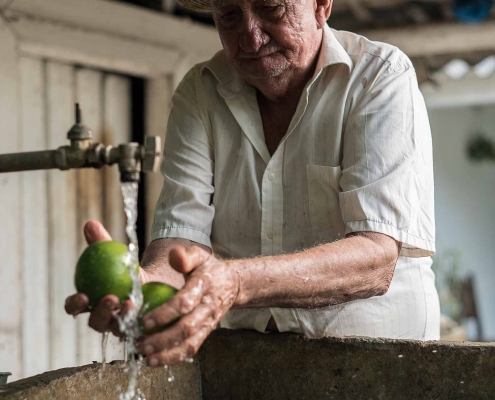
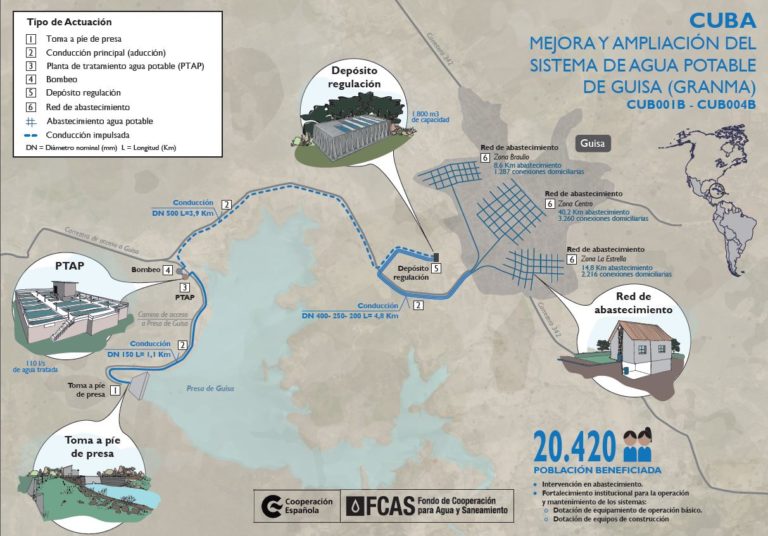
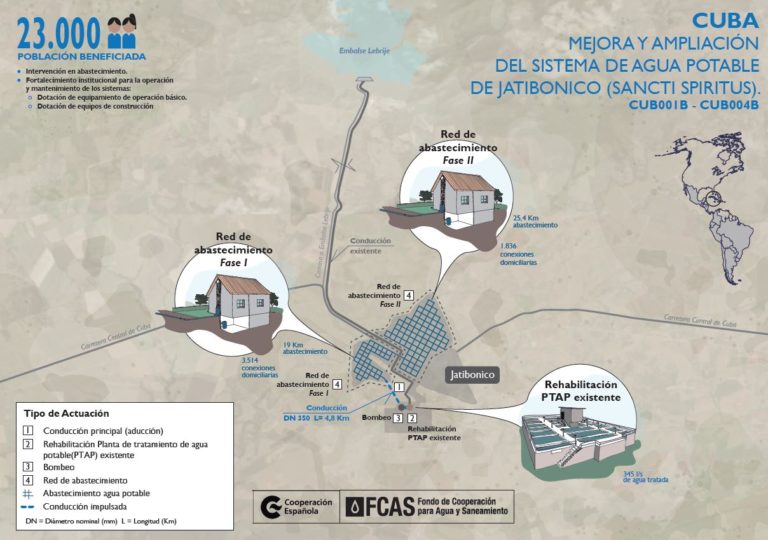
Throughout the year 2024, work has been carried out in Cuba on the implementation of three programmes, one of which has been definitively completed. This is the programme for the Improvement and Extension of Drinking Water and Sanitation Services in Small Cuban Cities, Phase II, which has worked on two aspects. On the one hand, the rehabilitation, extension and improvement of six drinking water systems affected by various hurricanes in the municipalities of La Palma, Jatibonico, Guisa, Cueto, Báguanos and Guantánamo. On the other hand, the rehabilitation of a training centre for technicians of the National Institute of Water Resources (INRH) and the improvement of monitoring and project management capacities. In June 2024, the programme’s implementation period came to an end and the drinking water treatment plants, water mains, supply networks and connections were successfully delivered with water meters in more than 22,000 homes, improving the living conditions of an estimated 80,000 Cubans. The programme was closed with an FCAS investment of over €4.5 million.
At the same time, the programme for the improvement and sustainable management of the water service in the municipalities of Cueto and La Palma (CUB-005B) is underway, which focuses on the recovery of the water supply to the towns of Marcané and Alto Cedro, former bateyes or settlements around large sugar cane mills, in the province of Holguín, and in the province of Pinar del Río, which are located in an agricultural region where tobacco, coffee and sugar cane are the main crops. This intervention has made it possible to implement infrastructure improvements in the drinking water treatment plants of La Palma and Marcané (in Cueto) and to strengthen the management of the water operators of both municipalities, through training and equipment for installations and the operation and maintenance of the systems. Lastly, emphasis will be placed on raising public awareness of the correct storage and efficient use of water, as well as on the detection of large consumers and the application of the relevant measures.
The concentration of grants in Holguín and Pinar del Río has made it possible to make significant progress, considering the country’s own difficulties. In Holguín, the Jagüeyes intake works and pumping station have been completed, 3 of the 7 km of water mains to take water to the Ramón II Drinking Water Treatment Plant (DWTP) have been laid, and 70% of the new technological equipment has been installed to renovate this plant, which will supply water first to Marcané and, after re-pumping, to Alto Cedro. In La Palma, work has been carried out on the diagnosis and rehabilitation of important parts of the DWTP, such as the floating intake, the main siphon and the plant’s tank.
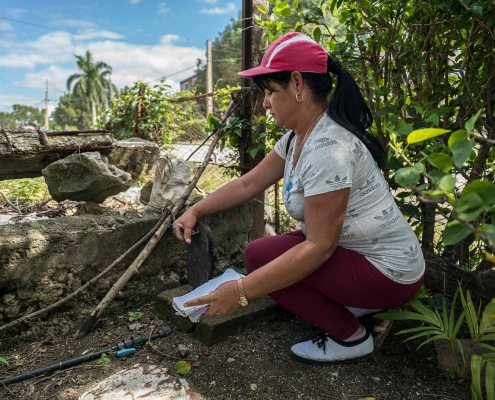
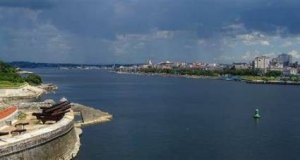
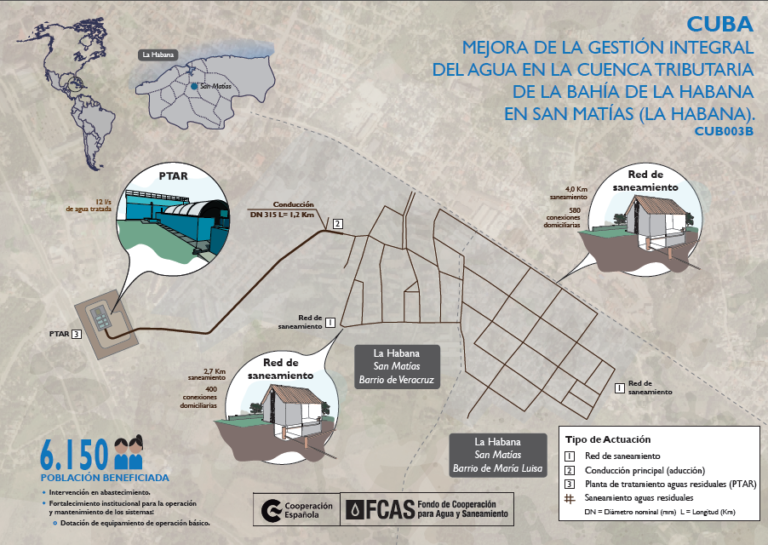
On the other hand, there is the CUB-003-B programme, which works to improve integrated water management in the tributary basins of the bays of Havana and Santiago de Cuba. In both cases, action is necessary because environmental pollution and solid and liquid waste from wastewater -domestic or industrial- exceed the self-purification capacity of the bays, breaking the ecological balance of both ecosystems. The programme is therefore working on the construction of three new wastewater treatment plants, as well as sewerage and pumping systems associated with Havana’s central sanitation system. During the year 2024, commissioning tests were carried out at the San Matías DWTP, identifying assembly problems that affected the operation of the plant and work has been done to find solutions. Work has also continued on the civil works and the installation of the technological equipment for the Prosperidad WWTP, which will be operational in 2025.
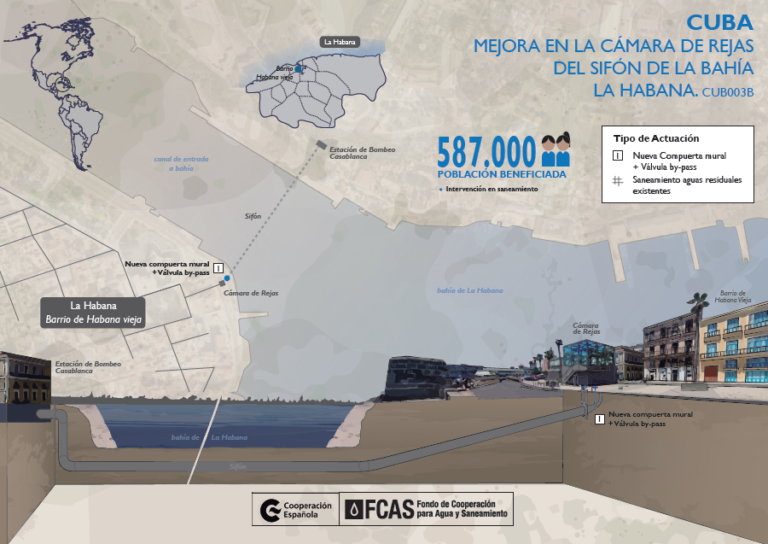
With regard to the automated pumping system of Havana’s central sewerage system, two of the five pumps have been installed and work has begun on the adaptation of the Casablanca station, which collects wastewater from a high percentage of the capital’s users and, after passing through a siphon that bridges the entrance to the Bay, pumps it back to a marine outfall.