
A significant gap in access
Indigenous peoples face a huge gap in access to water and sanitation services, as highlighted by numerous UN reports and the latest publications of the Special Rapporteur on the human rights to water and sanitation.
Being aware of this reality, between July and December 2024, the Cooperation Fund for Water and Sanitation carried out, through a consultancy implemented by the Stockholm International Water Institute (SIWI) and the Inter-American Development Bank, a study to analyse in depth how the cultural diversity approach has been implemented and where further progress is needed. This initiative was financed by the European Union, through LAIF funds, and is part of AECID and Global Gateway’s efforts to include the most vulnerable populations in programmes to improve access to drinking water and sanitation.
Related information
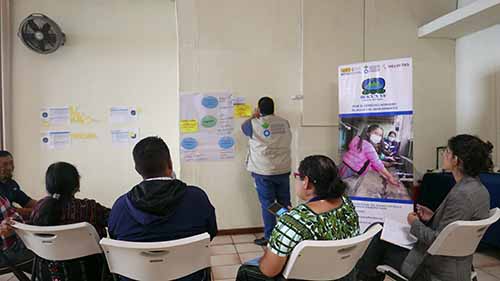
The Water Fund analyses its approach to working with indigenous peoples and rural schools in its programmes
The Cooperation Fund for Water and Sanitation is conducting a study through SIWI and the IADB to analyse in depth two key aspects of its global strategy: how is work being done in schools? And how is the cultural diversity approach being implemented to incorporate indigenous peoples into water and sanitation programmes?
Furthermore, in Mexico, a programme is working in coordination with the AECID’s Indigenous Programme to strengthen the effective participation, social inclusion and exercise of rights of indigenous peoples in the framework of access to water and sanitation, through a prior diagnosis and the development of free, prior and informed consultation. The objective is to obtain recommendations on how to work within similar programmes with indigenous peoples, which can serve as a guide for other initiatives.

