
Other associated programmes:
- There are no other active programmes
Dominican Republic
During the year 2024, progress has been made in the implementation of the main activity of the Programme, which is the drafting of the National Hydrological Plan for the country. Following the signing of the contract with the consulting firm in March, progress has been made on the different products, and a first socialisation campaign has been carried out in different provinces on the preliminary results of the Water Balance. However, there have been delays in the preparation and approval of the activities related to the Hydrological Balance, which have had an impact on the schedule. This situation and the commitment to strengthen the internalisation of regulations have made it necessary to consider a second extension of the programme, setting its end date by the end of 2025.
Related news:
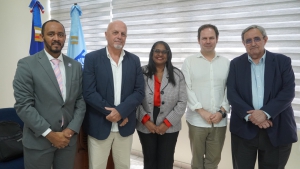
Indrhi begins socialisation of the national water balance and gives a presentation on dam safety
As part of the commemorative programme carried out by the National Institute of Water Resources ( Indrhi) , it organised several activities, within the framework of its 59th anniversary, aimed at strengthening the knowledge of its staff and institutions linked to the water sector, with the participation of international experts. The event took place at the headquarters of the water agency.
Likewise, among the actions carried out by the programme, in October and December, 50 technicians from different institutions in the water sector were trained in Hydrological Planning through a diploma course held at the Pontificia Universidad Católica Madre y Maestra (PUCMM).
Related news:
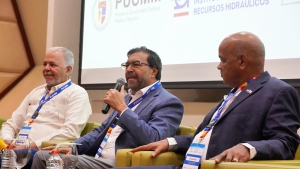
Indrhi highlights hydrological planning as a basis for water security and sustainable development of the country
The executive director of the National Institute of Hydraulic Resources(Indrhi), Olmedo Caba Romano, said that the planning of the country’s water resources is critical to ensure water supply to the different sectors and to continue promoting sustainable and inclusive development, which is part of President Luis Abinader’s agenda of priorities.
DOM-018-B: Ensure the human right to water by reducing vulnerability in the municipal district of Pedro García, province of Santiago.
In 2024, given that no activities had been implemented under this programme, it has been decided not to extend it. This decision was caused by the outcome of the two main tenders of the programme, which were launched at the end of 2023 and which, for the third time, were unsuccessful and neither of them could be awarded.
The initiative had a total budget of €730,000 (of which 582,000 were FCAS donations) and was designed to increase the capacities of CORAASAN (Santiago Aqueduct and Sewerage Corporation) and reduce the vulnerability of water and sanitation services and systems in this area, identified as particularly vulnerable. Santiago was one of the provinces most affected by Covid-19 and therefore it was decided to establish an emergency plan through this programme, which could later be replicated in other rural areas of the country.
However, following the difficulties previously mentioned, and after various management meetings between CORASAAN, the Ministry of Economy, Planning and Development (MEPyD) and AECID-FCAS, it was decided to close the programme, due to this delay and the unused funds, considering a possible reimbursement of the funds to be reused in another intervention. In June 2024, CORAASAN communicated its willingness to close the programme and return the funds.

