
preparation of comprehensive proposals for drinking water and sanitation solutions and their implementation in the most vulnerable rural communities,
Active programmes 2024:
- GTM-015-B: RU K’UX YA’, Contribute to health and the reduction of diarrhoeal diseases in the department of Sololá, by improving management and sustainable access to water and sanitation.
- GTM-019-B: Programme to strengthen governance and integrated management of water resources in Guatemala.
- GTM-020-B: Strengthening the management of water and sanitation services in the municipalities of Lake Peten Itzá.
- GTM-021-B: Phase II – RUK’U’X YA’ Programme: Governance and sustainability of water and sanitation services with an integrated and territorial management approach in the Lake Atitlán Basin.
- GTM-001-M: Drinking Water and Sanitation for Human Development Programme. Phase I.
Other associated programmes:
- GTM-018-ALC: Strengthening water resource management in the municipalities of Lake Petén Itzá.
Delegated Cooperation:
- Promoting Ecological Transition in the Petén region.
Guatemala
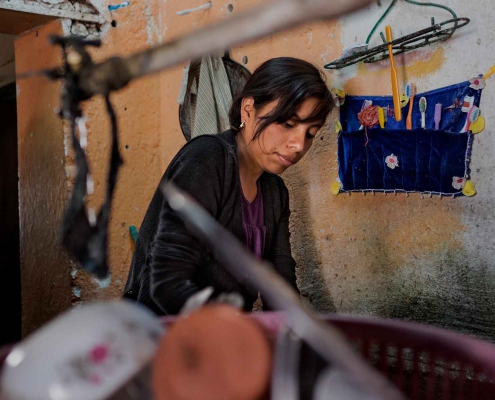
The FCAS portfolio in Guatemala is one of the most significant, both in terms of number and in terms of the Fund’s overall budget, representing a clear commitment by Spanish Cooperation to the country. It has a total of fourteen programmes, of which thirteen have been implemented bilaterally and one in collaboration with the Inter-American Development Bank (IDB). All of them fall under the Water and Sanitation line of the Country Partnership Framework for the reduction of child malnutrition.
The Fund’s interventions in Guatemala amount to a total of €123.7 million; €77.7 million of FCAS grant and €45.9 million counterpart from Guatemalan institutions.
The Fund’s actions will benefit more than 600,000 people directly and more than 4 million indirectly. The executing entities are municipal associations, civil society organisations and the municipality of Sololá for the bilateral programmes; and the Institute of Municipal Development INFOM-UNEPAR (Institute of Municipal Development – Unit for the Implementation of the Rural Aqueducts Programme) for the only multilateral programme.
In 2024, there are four programmes under implementation (GTM-015-B, GTM-019-B, GTM-020-B and GTM-021-B) and four in the justification phase (GTM-016-B, GTM-017-B, GTM-018-B and the Multilateral Programme – GTM-001-M), the other programmes of the bilateral portfolio having been completed. Work is mainly carried out along three lines of action:
The Multilateral Programme addresses the improvement of access to drinking water and sanitation services in rural, urban and peri-urban areas in the country.
GTM-015-B RU K’UX YA’, Contribute to health and the reduction of diarrhoeal diseases in the department of Sololá, by improving management and sustainable access to water and sanitation.
This programme, which was completed by February 2024, has had two main impacts. On the one hand, it has helped to increase self-management and promote sustainable maintenance of water systems, as well as to increase monitoring of water quality, as municipalities and Water and Sanitation Committees (CAS) have instruments and tools to measure and improve quality at the bacteriological level. In addition, a change in the behaviour of the population has been achieved in terms of excreta disposal, cleanliness and hygiene through the Santolic/Sahtoso methodology.
Likewise, work has been carried out on the implementation of actions to protect water recharge areas, the elimination of some sources of contamination in water sources, reforestation, awareness of the relationship between water and the forest and the care of natural resources. For all of this, work has been done in coordination with other actors such as CONAP (National Council of Protected Areas), INAB (National Forest Institute) and MARN (Ministry of Environment and Natural Resources).
On the other hand, this intervention has boosted the use of administrative, technical and legal instruments to help improve coordination between all actors contributing to the sustainability of water and sanitation management processes. In addition, training actions have been developed in the Bricklaying and Plumbing Training Centre with a specialisation in water and sanitation, a work that has been highly valued by students and local authorities, in terms of achieving the qualification and skills required in the trade. The training is based on the Learning-by-Doing methodology, which places special emphasis on developing the skills, abilities and techniques required in the bricklaying and plumbing trades. Work has also been done in schools and health centres to improve water and sanitation services, and the Healthy Schools strategy has been implemented. The incorporation of health and environmental education processes in each school, awareness-raising activities on menstrual hygiene, hand washing with soap and water, healthy eating and the efficient and timely use of the materials and resources of the «Hygiene is health» campaign has also been achieved. A new programme, GTM-021-B, was approved in December 2024, which will continue all this work and operate as a second phase.
GTM-019-B: Programme to strengthen governance and integrated management of water resources in Guatemala.
Integrated water basin management in Guatemala faces numerous challenges, mainly due to the lack of a solid legal and regulatory framework for water basin management, protection and recovery. The country is the only one in Central America without a water law, a water policy or a national plan for integrated water resources management (IWRM). Although twenty-five bills have been submitted, none have been passed, and existing legal frameworks lack institutional capacity for implementation at the municipal level. In addition, the limited participation of local stakeholders and sectors in water governance further hampers effective water management.
In this context, the Programme «Strengthening Governance and Integrated Water Resources Management in Guatemala» aims to support the Government of Guatemala, through the Ministry of Environment and Natural Resources (MARN) and, in particular, the Vice-Ministry of Water, in the development of regulatory instruments for the operation of the technical panels for basin management, as well as in the development of the National Policy for Water Resource Management in Guatemala. In addition, pilot actions will promote the protection, preservation and integrated management of water basins in two strategic territories: the San Pedro and La Pasión river basins. These basins have been selected for their geographical, economic, cultural and ecological relevance, as well as for their complexity in terms of governance and their importance at international level.
The programme was officially launched in July 2024, in a meeting attended by Mr. Mauricio Acevedo, Governor of Petén; Mr. Jaime Carrera, Vice-Minister of Water – MARN; Ms. Clara Girbau, Ambassador of Spain in Guatemala, the Municipal Mayors of Petén, representatives of the Government of Guatemala, Civil Society Organisations, local stakeholders and environmental organisations.
Related News:
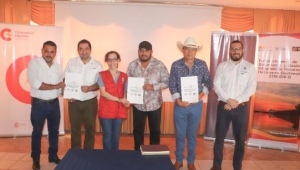
Guatemala makes progress in the protection and welfare of its water resources with support from AECID
The project «Strengthening Governance and Integrated Water Resource Management in Guatemala (GTM-019-B)» was officially launched in Santa Elena de Cruz, Flores, Petén. In addition, the formation of the Municipal Association for the Sustainable Development of the Municipalities of La Pasión and Usumacinta River Basins -MANCPASION- was signed.
Related News:
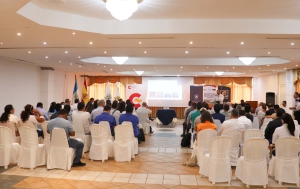
We launched the project on strengthening governance and integrated water resources management
Official launch of the project Strengthening Governance and Integrated Water Resource Management in Guatemala. The project Strengthening Governance and Integrated Water Resource Management in Guatemala GTM-019-B was officially presented in Santa Elena de la Cruz, Flores, Petén.
GTM-020-B Strengthening the management of water and sanitation services in the municipalities of Lake Peten Itzá (Guatemala).
Deficiencies in the management of public water, sanitation and municipal solid waste management services are causing the degradation and loss of biodiversity of Lake Petén Itzá and its basin. This situation generates health problems for the population and economic losses for the people and communities that depend on the lake for their livelihoods, as well as representing a medium-term threat to tourism and lake-related activities.
In response to this problem, this programme aims to expand, improve and optimise the sanitation systems in the municipalities of Flores and San Benito. Interventions include the extension of the sanitary sewerage network, the optimisation of the pumping stations and the strengthening of the wastewater treatment plant, thus contributing to the reduction of pollution in the Lake Petén Itzá basin.
The programme is part of Spain’s action within the Team Europe Initiative (TEI) «Fostering Green Transition in Petén». Its contribution focuses on Specific Objective 2: «The population of the Lake Petén Itzá basin has access to basic public water and sanitation services that are sustainable and lead to the reduction of polluting waste. During 2024, the programme was in the identification phase and was approved on 27 December 2024.
GTM-021-B: Phase II – RUK’U’X YA’ Programme: Governance and Sustainability Model for water and sanitation services with an integrated and territorial management approach in the Lake Atitlán Basin.
Most municipalities in Sololá are among the lowest poverty rates in the country, with deficiencies in basic services, housing and nutrition. For this reason, in 2017 FCAS identified the territory as a priority area for improving water and sanitation coverage and management. In response to this need, from March 2020 to February 2024, the RUK’U’X YA’ Programme (phase I) focused on reducing social vulnerability in terms of water-related impacts in 13 municipalities and 120 rural communities in the department. The programme had a very high impact in the region, with a strong focus on municipal and community strengthening, with an integrated approach in 13 of 19 municipalities in the department of Sololá, involving three key actors: municipalities, communities and institutions with a presence in the territory linked to water, sanitation and hygiene
Now, in this second phase (approved in December 2024), the RUK’U’X YA’ programme aims to strengthen the governance and sustainability model for water and sanitation services in the Lake Atitlán basin, again covering these 13 municipalities in the department of Sololá, Guatemala. This project is positioned as a comprehensive response to the fragility of the water and sanitation management system in the country and seeks to develop key initiatives to increase the progress achieved in the first phase of the programme, in terms of water, sanitation and environmental governance.
The project aims to contribute to the improvement of health and environment in the Lake Atitlán basin, through sustainable development and intervention by micro-watersheds. This results in specific actions, such as strengthening the governance model at the community, municipal and department levels, recovering environmental quality in the Chuiscalera micro-watershed, reactivating and improving the functionality of wastewater treatment plants, and supporting incident processes to improve public policies on water and sanitation management in order to reduce water-borne diseases. With a focus on gender and cultural relevance, it is expected to directly benefit 12,497 people and have an indirect impact on 53,113 families.
GTM-001-M: Drinking Water and Sanitation for Human Development Programme. Phase I.
June saw the end of a major initiative, the Drinking Water and Sanitation for Human Development Programme, which for a decade has been working in rural and peri-urban areas to improve access to water and sanitation services, as well as to encourage institutional development in the sector. It has been a highly ambitious initiative, supported by a €34 million grant by the FCAS, managed through the Inter-American Development Bank, which also contributed a loan of $50 million. Thanks to this effort, over 55,000 people in rural areas of the country and over 125,000 in urban and peri-urban areas have gained access to safe drinking water, transforming their quality of life.
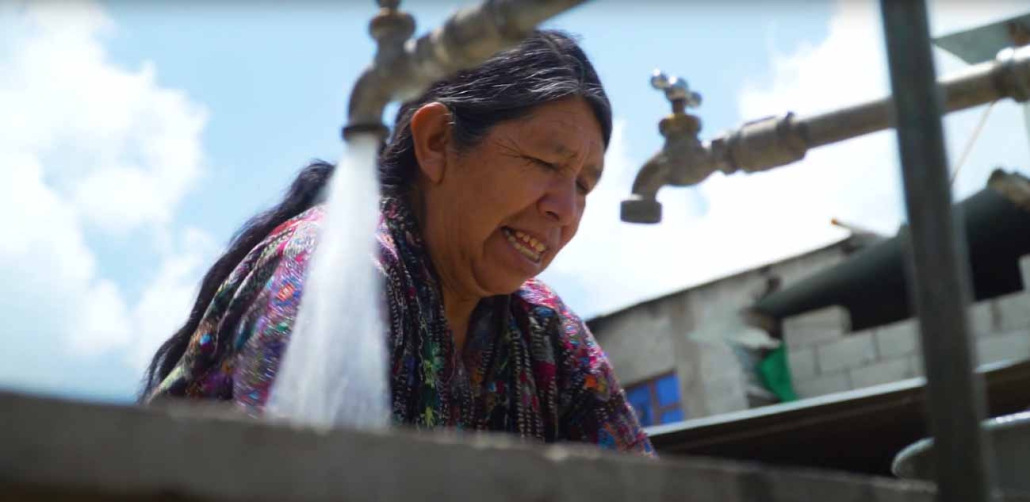
The programme also improved sanitation services for 74,000 people in rural areas and over 103,000 in urban areas, benefiting communities in 13 of the country’s 22 departments. To promote the sustainability of these improvements, training on efficient water use, system maintenance and solid waste management was implemented. Community participation in the administration of services was also promoted.
In 2024, projects to improve drinking water and sewerage systems and wastewater treatment plants in Esquipulas Palo Gordo, San Marcos and San Pedro Sacatepéquez were completed. After the completion of the works, the final reception of the works was carried out by INFOM. The municipal corporations are responsible for their operation and maintenance. The works carried out in the six municipal capitals are permanently monitored by UNEPAR-INFOM staff.
In terms of institutional development in the sector, support has been provided to the Ministry of Public Health and Social Assistance (MSPAS) for the creation of the Directorate of Drinking Water, Sanitation, Health and Environment, which entailed a modification of its organic regulations. Work was also done to strengthen the Steering Role for water quality. In 2024, the purchase of laboratory equipment to strengthen the monitoring and control of water quality was completed and delivered to the MSPAS. The equipment delivered will be used in the MSPAS’ steering role in the area of water quality control within the Directorate
Other associated programmes
Related News:
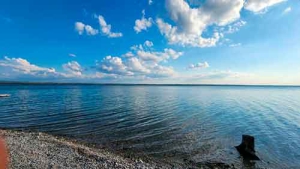
Guatemala is making progress in environmental protection and preservation in Petén with the «A more sustainable Petén» programme
«A more sustainable Petén» is an initiative of the Global Gateway investment agenda of Team Europe (composed of the European Union, Germany, Spain, Ireland, Sweden) as well as the Food and Agriculture Organisation of the United Nations (FAO). The objective of the programme is to link the social and economic development of Petén with the protection of the environment and the sustainable use of natural resources.
Related News:
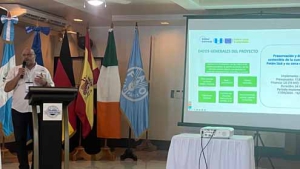
An initiative to protect Petén’s rainforest and promote an agro-ecological transition in the region
Spanish Cooperation is participating in the A more sustainable Petén programme, a joint initiative of the Global Gateway investment agenda of the European Union and the FAO. The first meeting of the Technical Committee of the A more sustainable Petén programme, a Global Gateway initiative of Team Europe, took place in the municipality of Flores, in the Petén region, from 1 to 4 October. The intervention is specifically supported by three Member States
Related information

