Cooperation Fund for Water and Sanitation
  • Home
  • At a Glance
  • Situation of FCAS
    • An overview of the different types of programmes
    • Results
    • Financial Implementation
    • Current status of the programmes
  • The Great Fund
    • Delegated cooperation
    • Reimbursable cooperation
    • Technical cooperation
  • Partnerships
  • Country operations
    • Bolivia
    • Colombia
    • Costa Rica
    • Cuba
    • Dominican Republic
    • Ecuador
    • El Salvador
    • Guatemala
    • Haiti
    • Honduras
    • Mexico
    • Nicaragua
    • Panama
    • Paraguay
    • Peru
    • Technical co-operations/IDB
  • How we work
    • Approach based on human rights to water and sanitation
    • Gender equality approach
    • Cultural diversity approach
    • Governance and Institutional Strengthening
    • Integrated Water Resource Management, environment and climate change
    • Communication and knowledge management
    • Management bodies
  • Versión en castellano
  • Menú Menú

Carried out by the IDB with FCAS Funds (FECASALC)

In addition to the programmes managed by the IDB (the so-called multilateral programmes throughout this Report), the Bank has launched other operations thanks to the interest generated or the reinvestment of funds from some programmes. As part of these efforts, targeted diagnostics have been undertaken across four thematic areas: rural water access, indigenous peoples, gender, and IWRM. In addition, ex-post evaluations have been carried out for the programmes in Honduras, Peru, Bolivia, Paraguay and Uruguay. The IDB has also carried out extensive communication and knowledge management work in coordination with the FCAS.

In addition, a $1.9 million operation has been launched in 2024 that will bring the Water Fund, through the IDB, to work in Venezuela for the first time. This initiative aims to contribute to the health of the population by improving water and sanitation infrastructures in pilot hospitals. To do this, it will intervene in centres located in the State of Zulia, on the border with Colombia. The operation, entitled «VE-G1002 – Support for the improvement of water services in priority health centres in Venezuela», is implemented through a civil society organisation and during the year 2024 the project team and the terms of reference for the final designs of two hospitals have been formed. Work is expected to start in the last quarter of 2025.

Finally, it should be noted that, up to 31 December 2024, the FCAS Executive Committee has approved a total of 17 technical cooperation initiatives. Of these, three were completed in 2023 (PR-T1268, Support to the Implementation of Reforms, Institutional Strengthening and Preparation of Long-term Investment Plans in the Water and Sanitation Sector in Paraguay; RG-T3422, Systematisation of Experiences and Support to the Development of Strategies in the Rural Water and Sanitation Sector and BO-T1353, Local Strengthening for the Use of Ecological Dry Toilets in Bolivia), and 11 others have been underway during 2024 (five were completed this year).  A further three are scheduled to commence shortly. Altogether, these initiatives have required a disbursement of €8.6 million, drawn from the funds allocated by the FCAS for collaboration with the IDB. The following is a brief summary of the current technical cooperation initiatives, starting with those that ended in 2024.

Current technicals cooperations

  • 1. RG-T3489 - Transboundary water resources: a water security framework for transboundary basins in Latin America and the Caribbean (completed in 2024). $500.000

    This initiative supports the development of transboundary water management models by means of tools that make it possible to carry out diagnoses and scenarios for shared management and hydrological planning, which minimise conflicts over the use of the resource and make it possible to plan its management in a resilient and sustainable manner. The transboundary issue is a fundamental aspect for the implementation of integrated water resources management in the region and is an aspect on which the Fund wishes to focus in particular. These resources complement an additional $800,000 from the Regional LAIF. To date, work has been done on the preparation of the analyses to be carried out in the Pantanal, the Amazon and the Trifinio, and progress has been made in the development of the scenario model of the Water-Energy-Food Nexus in the Amazon basin.

  • 2. RG-T3859 Promotion of policies and mechanisms for the promotion of innovation in the water, sanitation and solid waste sector in Latin America and the Caribbean (to be completed in 2024). $125,000

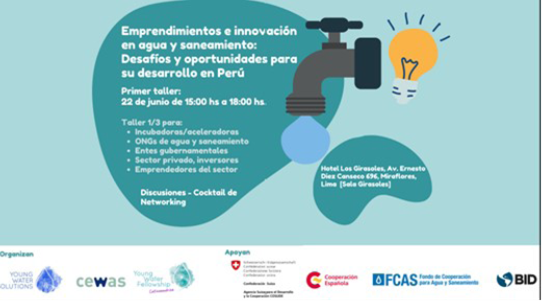
    Emprendimiento e innovacion

    This TC action formally ended in February 2024, using these two months of the year for systematisation and closure. It worked to foster sectoral innovation by identifying possible improvements in policy and governance mechanisms, as well as the development of tools to facilitate the strategic management of innovation. This TC action goes beyond the purely technological aspect, focusing on identifying issues linked to strategic management and social innovation. This intervention will promote the area of institutional strengthening and will focus on a key aspect for the development of the sector –innovation– from a perspective of great interest to Spanish Cooperation, namely public policy.

    Work has been carried out on the development and validation of a rapid maturity assessment tool for water and sanitation innovation ecosystems.

  • 3. UR-T1260. Support for the development of national drinking water and storm drainage plans in Uruguay (completed in 2024). - $200,000

    This initiative, which ended in 2024, was designed to provide continuity and complement the Integrated Water Resources Management Adaptation Plan programme, which was previously implemented by the Fund. On the one hand, it focuses on supporting strategic elements of the National Drinking Water Plan, an aspect that has undergone modifications with respect to the initial approach, since between late 2022 and early 2023, Uruguay suffered one of the worst water crises in its history, which caused significant impacts on the agricultural sector and drinking water supply. The TC intervention provided support for the management of the crisis. Another aspect was the support to the government to ensure that services comply with the new (now more stringent) drinking water standard for arsenic. In addition, work has also been carried out on the development of Uruguay’s Strategic Plan for the Storm Drainage Subsector (PEDP) under the technical supervision of the National Water Directorate (DINAGUA). Thus, the foundations have been laid for future urban stormwater management throughout the country, addressing both flood risk mitigation and the opportunities that the presence of water provides in terms of territorial development and socio-urban integration. Finally, work has been done in a pilot coastal town, Punta Diablo, where the diagnosis and sanitation strategy for the locality have been developed.

  • 4. RG-T3596 - Promoting Gender Equality in the Water and Sanitation Sector - Regional (completed in 2024). $500,000

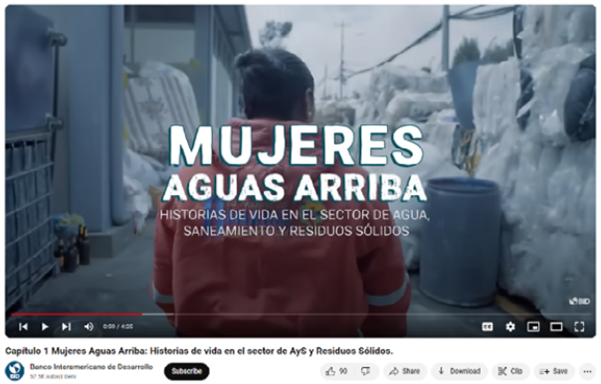
    Mujeres aguas arriba

    This initiative aims to define and develop lines of action that promote gender equity in the water and sanitation sector through specific approaches and tools. In 2022, the support to CONAGUA in Mexico stands out. In addition, it had previously supported the development of a Gender and Diversity Module for the AquaRating tool (the rating agency for the evaluation of water and sanitation utilities), which is being tested in two operators, EPMAPS (Quito) and AySA (Buenos Aires). On that basis, a scaling-up of the tool will be initiated with at least five other operators. With regard to programme support, work has been done on the preparation of the Integrated Solid Waste Management Programme in Gran Santo Domingo, in which FONPRODE participates, as well as the Comprehensive Rural Water and Sanitation Programme II, PIASAR II, which is a second phase of the programme implemented by FECASALC and which has already been completed.

    Also noteworthy is the awareness-raising work of «Mujeres Aguas Arriba»: eight video episodes compiling the life experiences of leading women in water, sanitation and solid waste.

    .

  • 5. RG-T3711 Support to actions developed in the field of CODIA. Regional (completed in 2024). $100,000

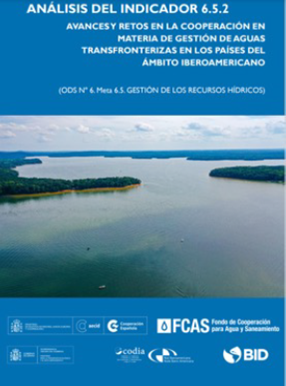
    analisis indicador 652This cooperation was launched to support the Conference of Ibero-American Water Directorates (CODIA) in the development of strategic actions for the sector in the field of water planning, integrated water resources management and training. In the field of training, the activities are part of the Ibero-American Training Plan (PFI), which is also worked on with UNESCO, in collaboration with AECID’s Intercoonecta and RALCEA. In the knowledge field, work has been done to analyse how countries are reporting on the different targets linked to SDG 6.

  • 6. RG-T3857. Desalination as a water resource alternative in the Latin American and Caribbean region. $300,000

    The objective of this TC intervention, which is still ongoing, is to identify opportunities and keys for the development of desalination alternatives in a context of water stress and climate change. To date, a diagnosis has been completed, the objective of which was to carry out an analysis of desalination in the region, studying existing experiences, studying in depth the keys that require the implementation of this type of solution and identifying opportunities for its development. The analyses have been carried out on the basis of interviews and working sessions with plant managers, project implementers, design consultants, government officials and specialists in the field in institutions (development banks, UN and aid agencies).

  • 7. RG-T3915. Capacity building of small water and sanitation operators in the region $500,000

    This regional cooperation action aims to promote the sustainability of water and sanitation services by supporting small operators through the development of tools and assistance to specific actors.

    To date, work has been carried out on a diagnosis of the training offer for operators in order to identify opportunities and aspects to be improved, training workshops have been held in Honduras and Argentina, a tool is being developed to register cadastres and link them to hydraulic modelling, and diagnoses and improvement plans are being carried out for operators in Honduras, Peru, Ecuador and Chile.

  • 8. RG-T4428 - Support to the development of joint collaboration frameworks for the water and sanitation sector on the Hispaniola Island. REGIONAL (Haiti and Dominican Republic). $150,000

    Objective. Promoting lines of collaboration between Haiti and the Dominican Republic to contribute to the universal and sustainable provision of drinking water and sanitation services on the Hispaniola Island. The TC action will have a special focus on water resources. The TC action has started implementation in 2024, but activities have focused on establishing the coordination channels with the institutions of both countries and on contracting a consulting firm to start the technical analyses of hydrological modelling.

  • 9. GU-T1348 - Support to the sustainability of Drinking Water and Sanitation services built through the Drinking Water and Sanitation for Human Development Programme - Phase I. $500,000

    This TC initiative aims to define and implement a sustainability strategy for urban and rural infrastructure and drinking water and sanitation systems built by the Drinking Water and Sanitation for Human Development Programme (Phase I), with the purpose of ensuring that municipalities, the

    National Institute for Municipal Development (INFOM), the Implementing Unit of the Rural Aqueduct Programme (UNEPAR) in coordination with municipalities, as well as organised rural communities (Water Boards or Community Development Councils (COCODES)), to provide efficient and self-sustainable services to the population. The sustainability strategy to guarantee a good service to the population will include, among other aspects, improvements in managerial, technical, financial, commercial, social and environmental issues of the companies, directorates and/or municipal water and sanitation offices (OMAS).

    In the course of 2024, the selection and contracting of the firm responsible for the implementation of the TC action (Helvetas) was carried out, which was selected through a process in which 17 bidders submitted offers. The operation’s launching workshop was held during this period. The main result to date has been the review with INFOM of the planning of the activities to be carried out and the establishment of the coordination framework.

  • 10. PR-T1360 - Support to the water and sanitation sector in Paraguay towards sustainable service provision and sectoral planning. $466,000

    Objective. (i) Support the Government of Paraguay in the definition of strategies to ensure the sustainability of water and sanitation services through investment planning, support to service providers and the strengthening of the sector’s institutions so that the country advances in the agenda of the mainstreaming of drinking water and sanitation services. The TC implementation started in 2024, and the activities carried out have focused on the preparation of actions.

    The TC initiative will focus on strengthening the operators of the systems built under a previous programme and, taking into account previous learning, works on a framework for the support of operators linked to new interventions. Work will also be done on more comprehensive sectoral support to help structure the sector and make it function in a more modern and efficient way.

  • 11. Development of strategies to ensure water, sanitation and hygiene services in informal settlements. Regional. ($1 million from FECASALC and $250,000 from Infrafund)

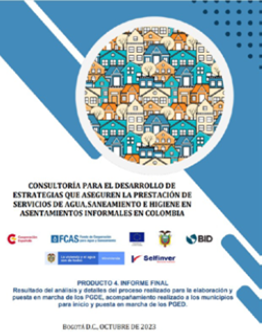
    consultoria desarrollo estrategias

    This intervention, currently under implementation, aims to support partner countries in defining strategies to ensure essential services in informal urban areas with high health vulnerability. To this end, diagnoses, action plans and pilot projects will be drawn up, taking into account urban planning conditions, alternatives for providing water and sanitation services, the legal and regulatory framework and successful experiences. These guidelines will help define policies and programmes aimed at guaranteeing services in these areas and closing the gaps in coverage that particularly affect vulnerable population.

    A regional diagnosis on the provision of water and sanitation services in informal settlements and the diagnosis of the situation of the provision of water, sanitation and hygiene services in informal settlements in the Metropolitan Area of Asunción and in Colombia are being conducted. A Toolkit consisting of six guides has been prepared with the main objective of supporting the reader with criteria, checklists, step-by-step, roadmaps and analysis questions to strengthen water, sanitation and hygiene interventions in informal settlements.

    An e-hackathon was held for informal settlements and in relation to the winning projects, support is being given to the foundation of four companies to develop the defined products.


Ministerio de Asuntos Exteriores - AECID - Cooperación Española

Cooperation Fund for Water and Sanitation
Av. Reyes Católicos 4 – 28040 Madrid
dfcas@aecid.es

Acceder a la versión en castellano Versión en castellano

Annual Report 2024 FCAS - Ministerio de Asuntos Exteriores, Unión Europea y Cooperación Agencia Española de Cooperación Internacional para el Desarrollo - 2025

Language/s: English. Free / Website / On line / Various formats

Legal Noticie | Accessibility | Web map

NIPO Web: 109-25-024-6

Desplazarse hacia arriba